

Slab leaks · Hendricks County & surrounding
Slab leak detection & repair
A leak in a water line under your concrete slab can run for weeks before you see it — while it wastes water and soaks the ground under your home. Slab leaks need proper leak detection to pinpoint the spot before any concrete is opened; then Essential Plumbing repairs the line the right way for your home, whether that’s a spot repair or rerouting the line. Available 24/7.
Signs of a slab leak
- Warm or hot spots on the floor — often a leak in a hot water line.
- A water bill that jumps without any change in how you use water.
- The sound of running water when every faucet and appliance is off.
- Damp carpet, warped flooring, or new cracks in flooring or walls.
- Low water pressure that came on without explanation.
- The water meter keeps moving with everything in the house turned off.
- On a private well: the pump turns on by itself when no water is being used.
What to do if you suspect a slab leak
- Turn everything off — faucets, toilets, the washer, the dishwasher, the ice maker and irrigation.
- Check the water meter. If the dial or leak indicator is still moving, water is going somewhere. (On a well, listen for the pump starting with nothing running.)
- If you see water or the floor is hot, shut off the main water valve. If the warm spot points to the hot side, you can also close the cold-water supply valve on the water heater.
- Call us at 317-899-9009 — day or night. Don’t start breaking up flooring to look for it.
How a slab leak is found
Because the leak is hidden under concrete, a slab leak generally needs proper leak detection to pinpoint the exact spot before the slab is opened. Pinpointing first means only the area that needs repair gets opened, instead of breaking up floors to guess. In some cases, isolating and testing sections of the plumbing also helps narrow down which line is leaking, such as the hot or cold side. If the problem may be a drain line under the slab rather than a water line, a camera inspection can help show what’s going on. Once the location is confirmed, we walk you through the repair options.
Repair options
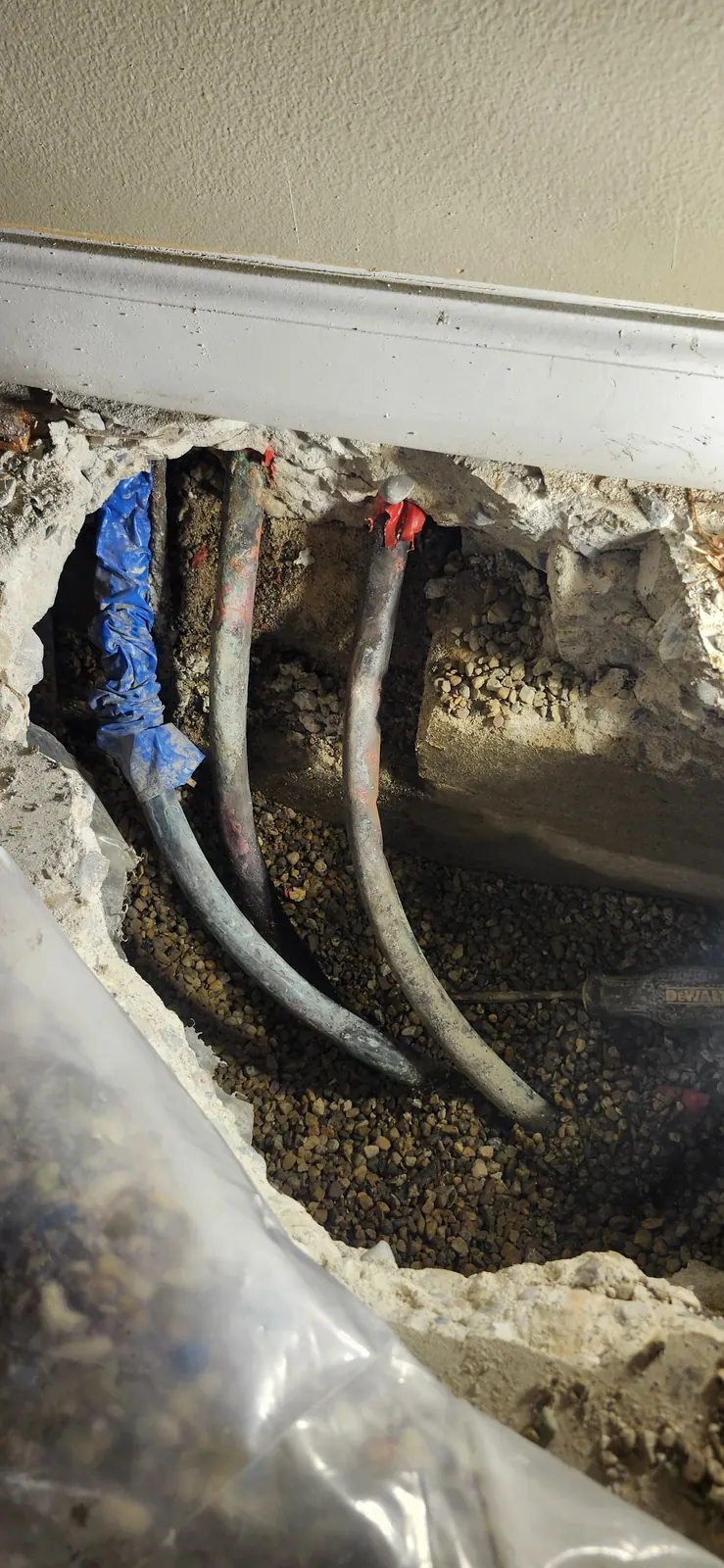
- Spot repair: opening the slab at the leak, repairing the damaged section of pipe, and closing the slab back up. Often a good choice for a single, isolated leak.
- Rerouting the line: abandoning the leaking section under the slab and running a new line through walls, ceilings or the attic instead. Often a better long-term choice when a line has leaked more than once or the pipe under the slab is in poor condition.
Once the leak has been pinpointed, we walk through the options with you before any repair begins, so you can choose what makes sense for your home.
Available 24/7 across Hendricks County and nearby towns. Licensed in Indiana · LIC#CO52400024.
Call 317-899-9009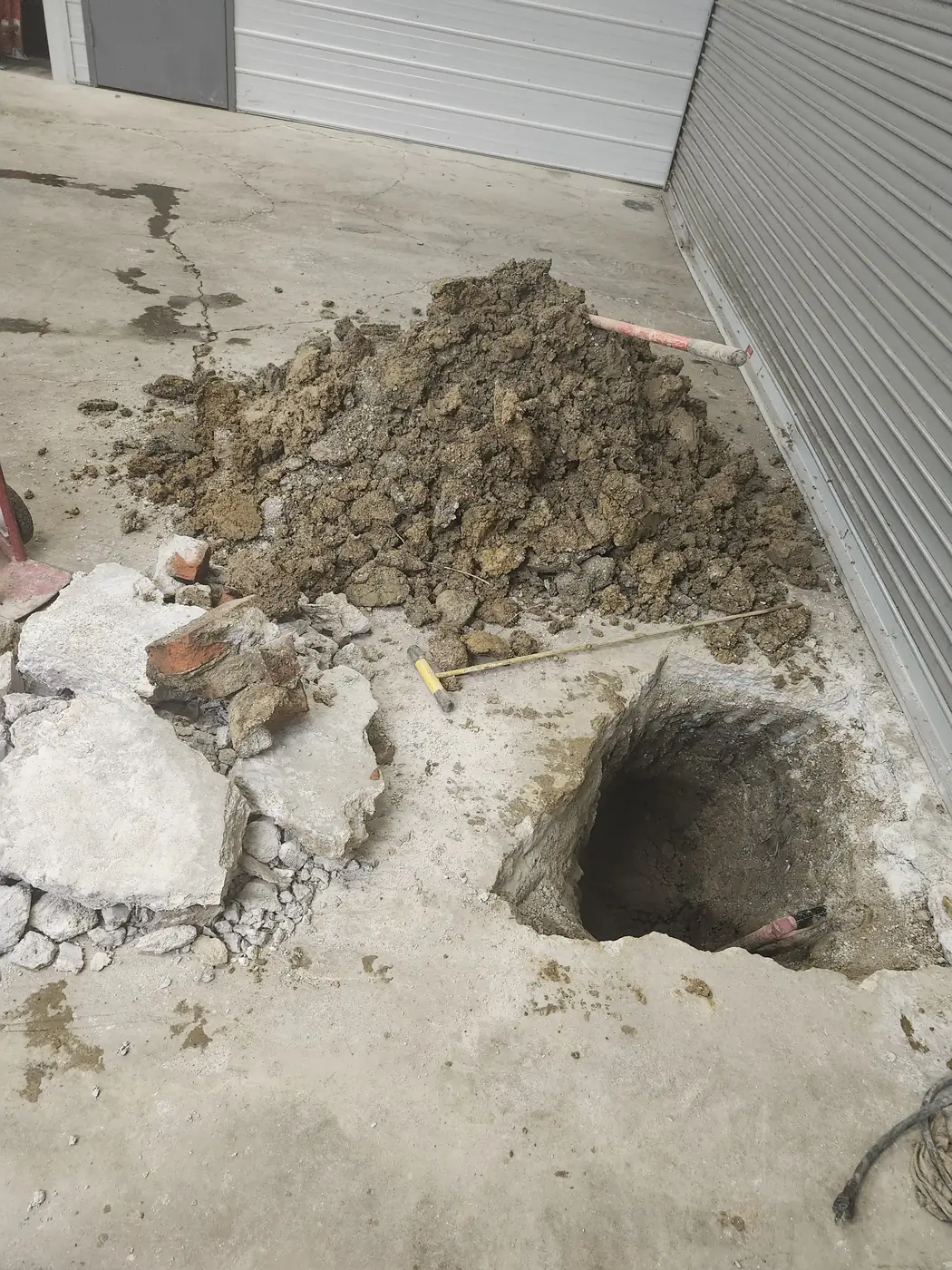
Questions
Frequently asked questions
What causes slab leaks?
Slab leaks happen when a water line under the concrete fails — for example from corrosion, wear where the pipe rubs against concrete or gravel, a weak joint, or ground movement. Water quality and the age of the pipe can both play a part.
How do I know if I have a slab leak?
Common signs are warm spots on the floor, an unexplained jump in your water bill, the sound of running water when everything is off, damp flooring, and a water meter that keeps moving with all fixtures turned off. If you notice any of these, call us.
Is it better to repair the spot or reroute the line?
It depends on the pipe and the home. A single, isolated leak is often a good candidate for a spot repair. If the line has leaked before or is in poor condition, rerouting it above the slab is often the better long-term fix. We’ll explain the options once the leak has been pinpointed.
How is a slab leak found?
Slab leaks are hidden under concrete, so they generally need proper leak detection to pinpoint the exact spot before the slab is opened. Sometimes isolating and testing sections of the plumbing also helps narrow down which line is leaking. Pinpointing first keeps the repair area as small as possible.
Is a slab leak an emergency?
A slab leak can damage flooring and the ground under your home and waste a lot of water, so it shouldn’t wait. If you see water or a hot spot, shut off the main valve and call 317-899-9009 — we’re available 24/7.
Related services
Areas we serve
Based in Pittsboro, we provide this service throughout Hendricks County and nearby towns, including:

Get in touch
Think you have a slab leak?
Call 317-899-9009 day or night. We’ll help you get the leak pinpointed and walk you through the repair options.
Licensed in Indiana · LIC#CO52400024 · 20+ years in the trade · Locally owned in Pittsboro, IN